More than ordinary clutter
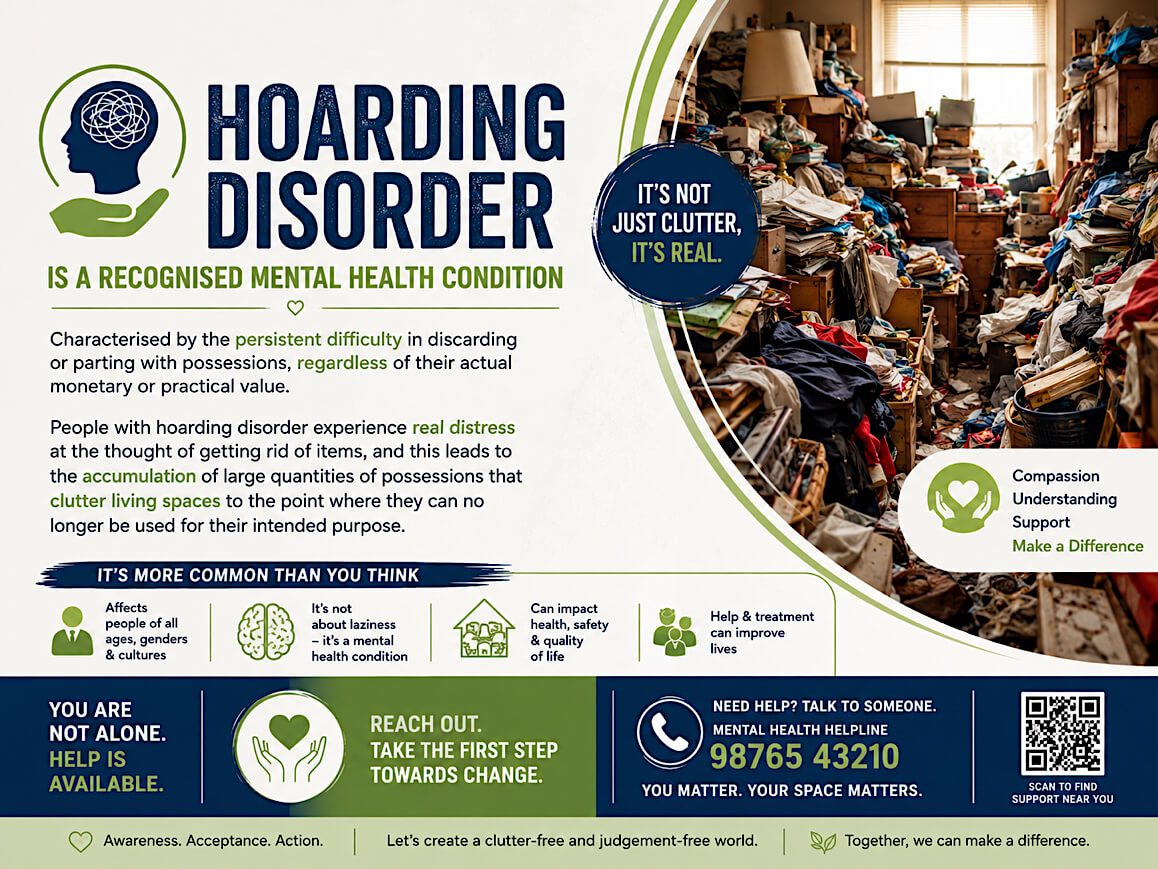
Hoarding disorder is a recognised mental health condition, not laziness or untidiness. It involves persistent difficulty parting with possessions, regardless of their value, and intense distress at the thought of letting them go.
Signs to look out for
Common signs include rooms that can no longer be used for their purpose, blocked walkways or exits, difficulty managing everyday tasks like cooking or washing, growing social isolation, and strong anxiety when anyone suggests clearing things. Often a person feels deep shame, which makes asking for help even harder.
What helps
Patience, warmth and small steps help far more than pressure or ultimatums. Letting the person stay in control of decisions, and bringing in calm, non-judgemental practical help, can make change feel possible.
What this service includes
- Understanding the condition
- Recognising warning signs
- A non-judgemental approach
- Working at the person's pace
- Support for the whole family
- A clear, gentle plan
Good to know
Frequently asked questions
Is hoarding the same as being messy?
Here to help
Need help with a hoarded home?
Talk to us in confidence. No judgement, no obligation — just a clear, fair plan.