You're not alone, and neither are they
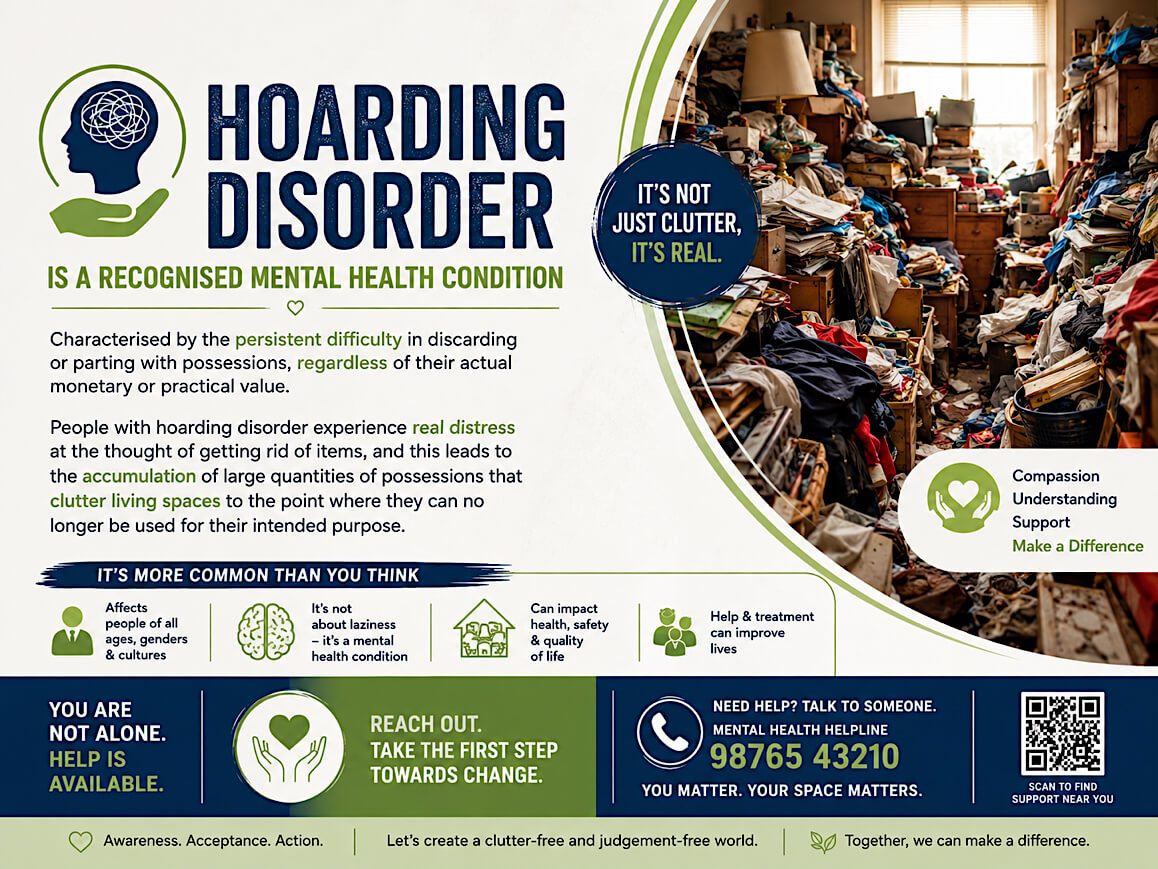
Watching someone you love live in a home that has become unsafe is frightening and exhausting. You may feel a tangle of worry, frustration and guilt — and you may have tried to help before, only for things to go back to how they were. None of that means you have failed. Hoarding is a recognised mental health condition, and lasting change takes patience, the right approach and, often, outside help.
How to start the conversation
- Lead with care, not criticism. Talk about your worry for their safety and wellbeing, rather than the mess.
- Avoid words like "rubbish" or "junk". To them, these are belongings with meaning. Respect that, even if you don't share it.
- Don't clear things behind their back. It can break trust and make the hoarding worse.
- Offer choices, not ultimatums. Feeling in control is central to a person's recovery.
- Be patient. Change usually happens in small steps, not one dramatic clear-out.
Signs it may be time to get help
Blocked exits, no working kitchen or bathroom, pests, damp, falls, or a tenancy or sale at risk are all signs that professional support is needed. If you recognise these, please don't wait until there is a crisis.
How we help families
When your relative is ready, we step in gently. We explain everything, ask before moving anything and keep the person at the centre of every decision. We can work alongside you, their GP, a social worker or a support charity, and we always treat the home — and the person — with dignity.
Here to help
Ready when your family is
There's no pressure and no judgement — just a calm conversation about what might help.